Keeping your devices powered in a GoCheap Campervan
The last thing that you need when you are on the road trip of a lifetime is to find yourself with a flat battery of any kind. Whether that be on your phone when you are navigating using maps, or in your campervan when you are free camping and needing a little extra light in the evening. That is why it is important to understand the power systems that are in your campervan, as different elements run off different power sources.
One of the first things to note is that campervans have two types of batteries, the house battery and the engine battery. We will talk a little bit about the house battery later, but the engine battery works exactly like it does in a normal car. It delivers a burst of power to start up the engine and helps to run the vehicles electrical components (like the headlights, stereo and other dashboard electrical appliances). This battery runs completely separately from the other electrical systems installed in your campervan, so you don’t have to worry about draining the engine battery while using the other electrical components in your campervan.
Knowing the Power System in your campervan
All GoCheap Campervans have at least one house battery, these are responsible for powering all the electrical systems in the campervan, such as the lights, water pumps, TV, fridge and other appliances that run off the 12-volt power. This type of battery can be charged by plugging into a 240-volt powered campsite, which we recommend you do at least every second night to keep your house battery fully charged and in tip-top condition.
The house battery can also recharge when you are driving your campervan, however if you plan on free camping, it’s important to be mindful of your energy usage to avoid draining the battery as it does take some time to fully recharge.
Which power for which device?
When connected to 240-volt power.
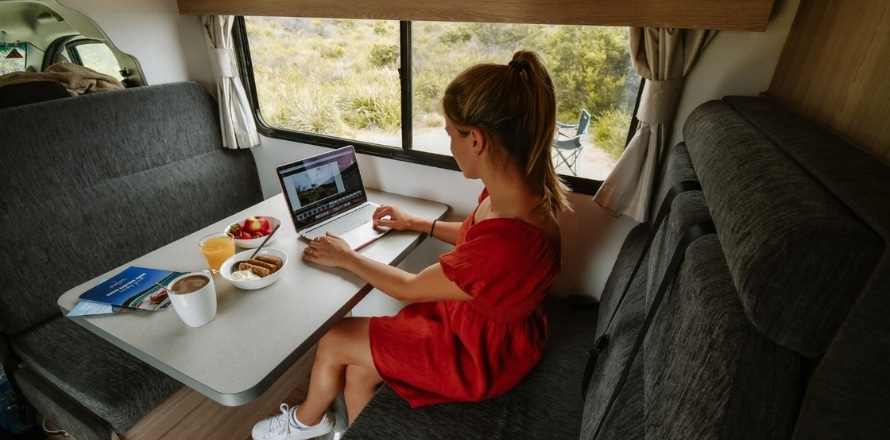
When you are connected to 240-volt power all the electrical systems in your campervan will be operational. You will be able to connect to the power outlets inside to motorhome to charge high-powered devices like laptops and cameras.
The only time you can use the microwave, reverse cycle air conditioning and heating system, and small appliances like the kettle and toaster, is when you are connected to 240-volt power.
The house battery charges when you are connected to this kind of power, and as this runs the remainder of the electrical components of your campervan it is essential that you charge up this battery every second night.
When running off the house battery and gas
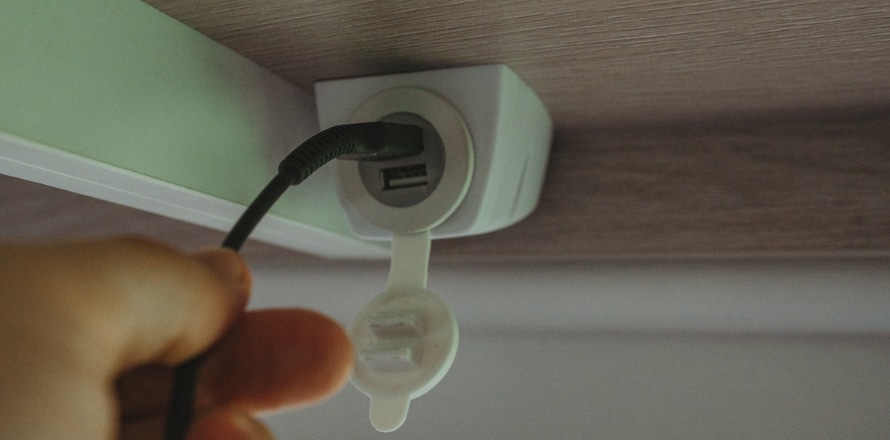
The inbuilt USB ports inside the campervan will allow you to charge small electrical appliances like mobile phones, tablets and other small gadgets. A helpful tip is to charge these sorts of devices while driving as this will use the electricity generated by the campervan’s alternator and help you to reserve the charge in your house battery.
The fridge in your campervan will continue to run while you are using the house battery or gas. Which source of power will depend on the type of fridge that is installed in your campervan. You can check this using the manual that is included in all GoCheap campervan rentals. No matter which type of fridge, we recommend leaving it in AUTO mode.
The stovetops inside a campervan run on gas. One bottle of gas should last you up to two weeks, however this does depend on how often you use the stovetop. Our 2-Berth campervans come fitted with one 4kg gas bottle, the remainder of our campervans are fitted with two 4.5kg gas bottles.
Maximising power while off grid
When you are relying on the house battery, for example when free camping, we have some tips and tricks to help you to maximise the amount of time that you get out of your house battery.
Turn off unnecessary appliances
The house lights, water pumps and other devices that are not currently in use should be switched off to conserve energy. Many of these items can be turned off at the electricity control panel inside your campervan.
Run the fridge efficiently
Avoid opening the fridge frequently, and if you are opening the fridge do so for the shortest time possible. This will help keep the fridge cold while reducing the amount of power that will be consumed by the fridge.
Plan your stops strategically
If you are planning to spend more than one night away from a powered campsite, you will need to plan when you are going to charge your campervan. The best way to do this is to schedule a night at a powered campsite and allow the battery to charge up overnight. As previously mentioned, we recommend that you do this at least every second night but understand that this is not always possible.
Power Banks
One of the most popular ways of charging small portable devices is by using a power bank. They most commonly use lithium-ion or lithium-polymer batteries to hold a charge for you to use when your device is low on power.
Power banks come in many shapes and sizes; some are even small enough to be carried in a pocket or handbag. Depending on the device/s that you are planning on charging with your power bank you will need to look at the number of mAh that the power bank can provide. The higher the mAh the more hours of power can be provided, so it is important to do your research before purchasing a power bank to ensure that you will have enough mAh to charge any devices you need.
Safety and Power Banks
There have been a lot of news stories and warnings around the use of lithium-iron batteries and portable power banks, with some airlines even banning them entirely. This is because they can be very flammable in the right conditions. If you chose to invest in a power bank for your journey always purchase one from a reputable brand and supplier and look for reviews or recalls against the product before making your purchase.
The ACCC in Australia has an in-depth guide for using and purchasing a power bank, which is worth taking the time to read if you are planning on purchasing or using a power bank on your trip. We recommend only using a power bank on a hard surface like the dining table and not leave it unattended while in use.
FAQs:
What happens if the house battery runs out?
If the house battery is depleted, essential systems like the overhead lighting, fridge and water pumps will no longer work. You will need to plug the campervan into a powered campsite overnight to fully recharge your battery.
You will still however be able to drive the campervan if the house battery is flat, as it is separate from the engine battery that provides power to the remainder of the campervan.
The amount of time that you will be able to go between charges will depend on your battery usage, but it is recommended to charge your house battery every second day.
What works when a campervan is NOT connected to a 240-volt power supply?
When your campervan is not connected to a 240V power supply at a campsite, everything except the power outlets, microwave, and reverse cycle air conditioning and heating will run on the house battery.
The TV, fridge, and house lights will run off the house battery in the vehicle if you are not at a powered campsite.
Is power required to use a campervans air conditioning?
The driver’s cabin will be air-conditioned as normal. However, you will need to be plugged into a powered campsite with 240-volt mains to use the air-conditioning or heating in the campervans living area.
How can I check my power levels?
Your campervan has a battery monitor, located near the control panel, which shows the current charge level. If you are looking for more information, check out the manual that is located inside your campervan rental.
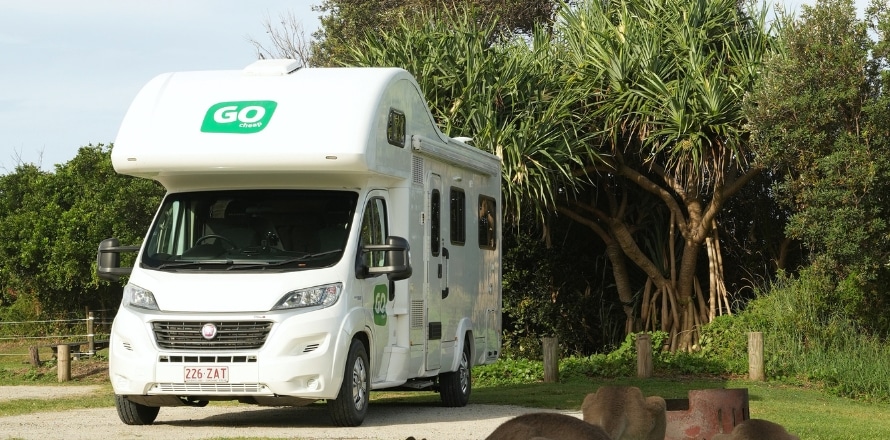
Image: GoCheap Henty
Ready to start planning your trip?
We have a bunch of resources, including itineraries, available on our website. You can find some holiday park recommendations in our travel blog, and check the amenities that are included in the campervans that are available.
Call our friendly reservations team on 1300 664 485 or check out our website to see the campervans we have available at our branches!